
Hiding behind tall poppies
2026-08-25
Bad news has a price. We serve masters who can withdraw our privileges when we stray from the behaviour they expect. Yet those same masters hire analysts to uncover facts and propose action. The brief contains its own danger: find the truth, but do not contradict the person who hired you. A leader may hold evidence unavailable to the analyst — or treat disagreement as incompetence.

That's an old problem
Paraphrasing Plutarch,
It takes an exceptional mind not to lose its bearings when everything has been going their way.
King Tigranes, Plutarch tells us, beheaded the first messenger who warned him that Lucullus was approaching. After that, no one dared to tell the king about the impending danger. Lucullus defeated his army, and Tigranes fled.
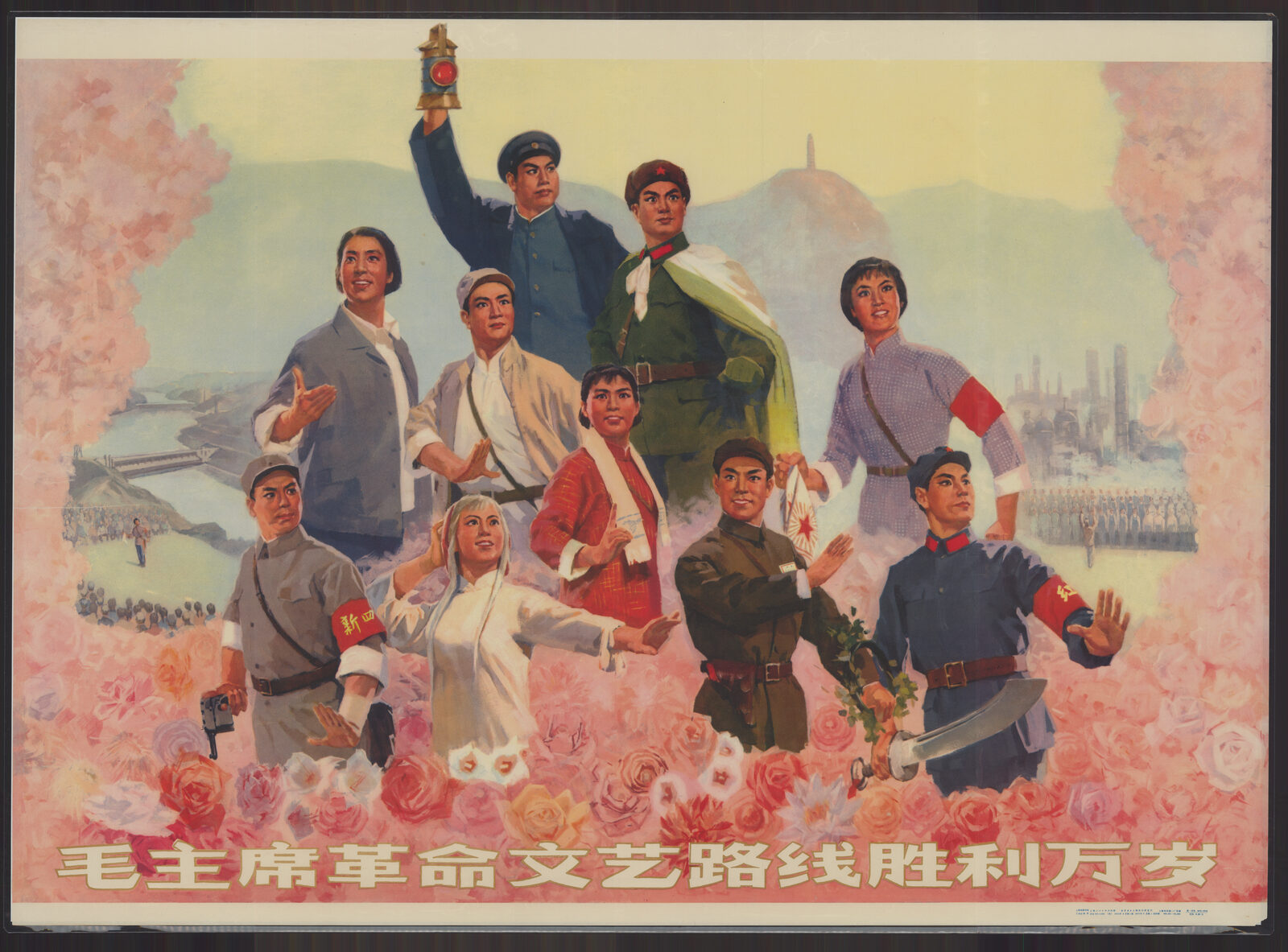
Mao Zedong confronted a related danger. Under the slogan Let a hundred flowers bloom, let a hundred schools of thought contend, he invited debate intended to advance the arts and sciences and strengthen the Communist Party's ideological control. The invitation had limits from the beginning: Mao distinguished “fragrant flowers” from “poisonous weeds”. When criticism extended to the one-party system and the Communist Party itself, the Anti-Rightist campaign punished the critics. The promise of candour became a means of identifying dissent. Sounds familiar?
Livy gives us another version of the warning: Livy writes of a king who answered a messenger without speaking,
The king went into the palace-garden, deep in thought, his son's messenger following him. As he walked along in silence it is said that he struck off the tallest poppy-heads with his stick.
The son understood. He accused, executed, assassinated, or exiled the city's leading men. Stripped of counsel and help, the city surrendered to his father without a battle.
Let a hundred tall poppies bloom
Nobody wants to lose their head when bringing bad news. How, then, do we save the kingdom from the invaders?
Most advice about data storytelling tells analysts not to present data without a narrative. A narrative improves readability and saves the reader effort. Much of that advice, however, concerns broadcast communication: news sites, infographics, or a single Tableau-like interactive visualisation.
On a news site, the analyst chooses the frame and the reader cannot answer back. In a boardroom, the reader signs the analyst's performance review. The risk has changed sides.
Neither person sees the whole field. The analyst lacks the leader's information; the leader lacks the analyst's evidence. Neither knows what the market will do next.
Hide behind data
A chart cannot allocate a budget, dismiss a vendor, or move an engineer; a leader can. Show the measurements, name the omissions, and trace the consequences. When asked for judgement, give it with conditions attached — but leave the decision with its owner.
How do we structure that?
| Step | Avoid | Use |
|---|---|---|
| Frame the decision | Allocate the next five engineers to Team A. | We must decide which team gets the next five engineers. |
| Compare results | Team A earns its keep; Team B burns cash. | Under the same calculation, Team A returned 5%; Team B returned 3%. |
| Separate fact from verdict | Team B is dead weight. | Team A closed 18 customer defects; Team B closed 11. |
| Make titles testable | Team B causes our outages. | 72% of production incidents during the reporting period originated in components maintained by Team B. |
| Price the consequence | Move five engineers from Team B to Team A. | At the current incident rate, Team B's components consume 18–25 engineer-days of remediation each month. |
| Hand back the decision | Move five engineers from Team B to Team A. | Which matters most: fewer incidents, lower transition costs, or fewer resignations? |
“Team B causes our outages” is a verdict; the incident count is a testable claim, not a self-validating fact. The report must still supply its source, denominator, definitions, and attribution method. The stakeholder will eventually ask, “What would you do?” Do not refuse the question; refuse the naked answer.
Answer: Given these assumptions, I would invest in Team A. If employee retention outweighs annual return, I would choose Team B.
Now the opinion exposes its hinge: if the hinge moves, the answer moves, but the leader still decides. Six months later, the market may turn. The recommendation will remain in the slide deck; its assumptions may not. Then hindsight converts advice into a promise and a recommendation into blame.
Every report cuts: a date range excludes earlier losses; an incident definition excludes near misses; a chart that ranks annual return omits employee retention. Selection is judgement. Do not disguise it. Put the source, denominator, exclusions, and assumptions beside the claim; give the reader enough evidence to attack your conclusion without attacking your honesty.
So, instead of opinion, show what the reader can test:
| Avoid | Use |
|---|---|
| This architecture is a death maze. | Seventeen services, 43 runtime dependencies, six owners. |
| The project is collapsing. | Four of six milestones missed; launch delayed eleven weeks. |
| This process burns cash. | Cost per approved claim rose from $310 to $840. |
| Fire the vendor. | Nine SLA breaches in 60 days; switching costs $42,000. |
Show your evidence. Expose its limits. State your judgement.
Let the room conclude.
